Russia’s air force is a more dangerous threat to NATO today than it was before the invasion of Ukraine in February 2022, according to two military analysts who say the war has hardened Moscow’s pilots, sharpened its tactics and helped preserve enough aircraft to keep the force viable.
Justin Bronk said the Russian air force now “represents a greater threat to Western air power capabilities in Europe than it did prior to the invasion of Ukraine,” while retired U.S. Army Maj. Gen. Gordon “Skip” Davis warned that “NATO can't be complacent with what it thought Russia once was as an air power versus what it is now.”
The warning matters now because Western planners have spent much of the war focusing on Russia’s losses in Ukraine, including its failure in 2022 to win control of the skies and the destruction or damage of around 130 fixed-wing aircraft, according to Bronk. He said the losses were real, but they have also encouraged a misleading conclusion inside NATO that Russia’s air arm has been weakened more than it has.
Bronk said the force known as the VKS is, in many respects, more capable in 2025 than it was in 2022, in part because Russia’s war in Ukraine has given its pilots combat experience and lessons in modern warfare. He said the Russian air force has also upgraded systems and weaponry during the conflict and has been producing more aircraft than it has lost, helping increase its overall end strength.

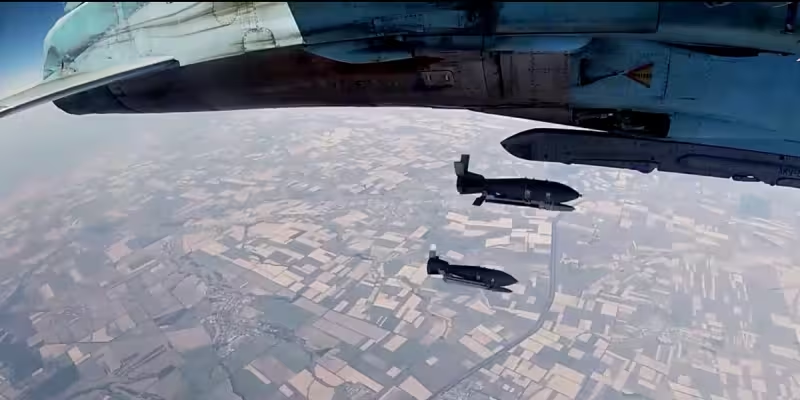
That production has mattered. Bronk said Russia has been able to build more Su-35S, Su-34s and Su-30SM aircraft than it has lost in the war, and that deliveries of other aircraft types have continued as well. The aircraft types with the highest losses, he said, are the Su-25SM and Su-34(M), at around 40 each.
Russia has also kept some of its best aircraft and better weapons out of the fighting, a sign that the air force it would field in a wider conflict could look different from the one Western observers have watched over Ukraine. Bronk said Russia’s aircrew cadre, including its pilots, has grown significantly more capable during the war, and that any losses in skilled crews have been more than offset by the extra flying time and combat experience gained over Ukraine.
Davis said the lesson for NATO is straightforward: Moscow should not be measured only by the force that struggled early in the war. “Russia is more dangerous now to NATO than it was before the war because of lessons learned,” he said. Bronk added that while the attrition has been severe, “a lot of the areas that the Russian forces have been really worn down aren't particularly relevant for us in that fight.”
The result is a harder Russian air threat than many allied capitals expected after 2022. NATO policymakers and military observers have often downgraded the danger posed by the VKS because of its battlefield record in Ukraine, but Bronk argues that view misses the parts of the force that matter most in a confrontation with the West.
“In many respects, the VKS of 2025 is a significantly more capable potential threat for Western air forces than it was in 2022,” he said.