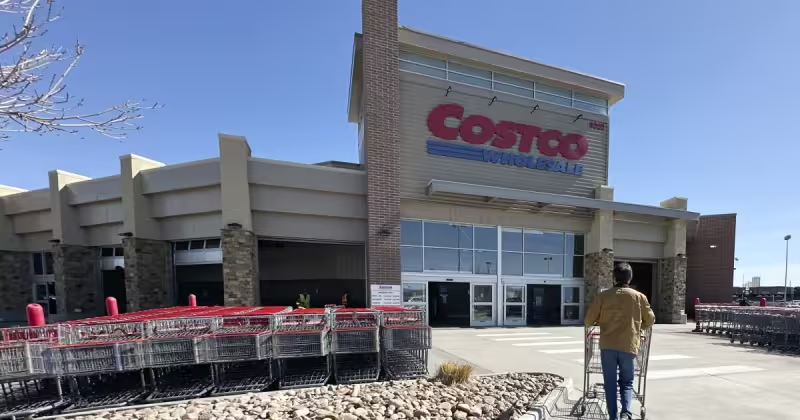
Costco is facing a class-action lawsuit from a California man who says the warehouse club renewed his membership without giving him the warning state law requires. Russel George alleges the company violated California’s auto-renewal rules by failing to send a notice at least 15 days and no more than 45 days before his annual membership expired.
George’s complaint says he would have canceled if he had received that notice in time. The lawsuit centers on Costco’s $65 annual membership and its $130 executive membership, both of which can renew automatically if a customer does not act. George says he does not use the membership enough to justify keeping it, and the filing quotes the complaint as saying that had he been notified on time, he would have canceled and not gone forward with the auto-renewal.



The case matters because California law is written to give consumers a clear off-ramp before a plan rolls over. Businesses must tell customers before annual memberships expire, and they must also make cancellation easy, including through the same method used to enroll or the method a customer generally uses to deal with the company. The law also requires a toll-free phone number, email address or another simple cancellation option.
Costco’s own policy says members can cancel by calling a toll-free number or by going to a store. The lawsuit does not challenge that option directly so much as whether Costco gave George the required advance notice before the renewal happened. That issue lands at a time when auto-renewals are under wider scrutiny: in 2024, the Federal Trade Commission tried to put similar nationwide rules in place under the Biden administration, but a federal appeals court struck down that rule in July 2025.
George’s case is scheduled for a preliminary hearing in June, when a judge will begin sorting out whether the lawsuit can move ahead. Costco has been contacted for comment. For now, the dispute turns on a simple question with broad consequences: whether the company gave members the timely heads-up California law says they are owed before charging them again.