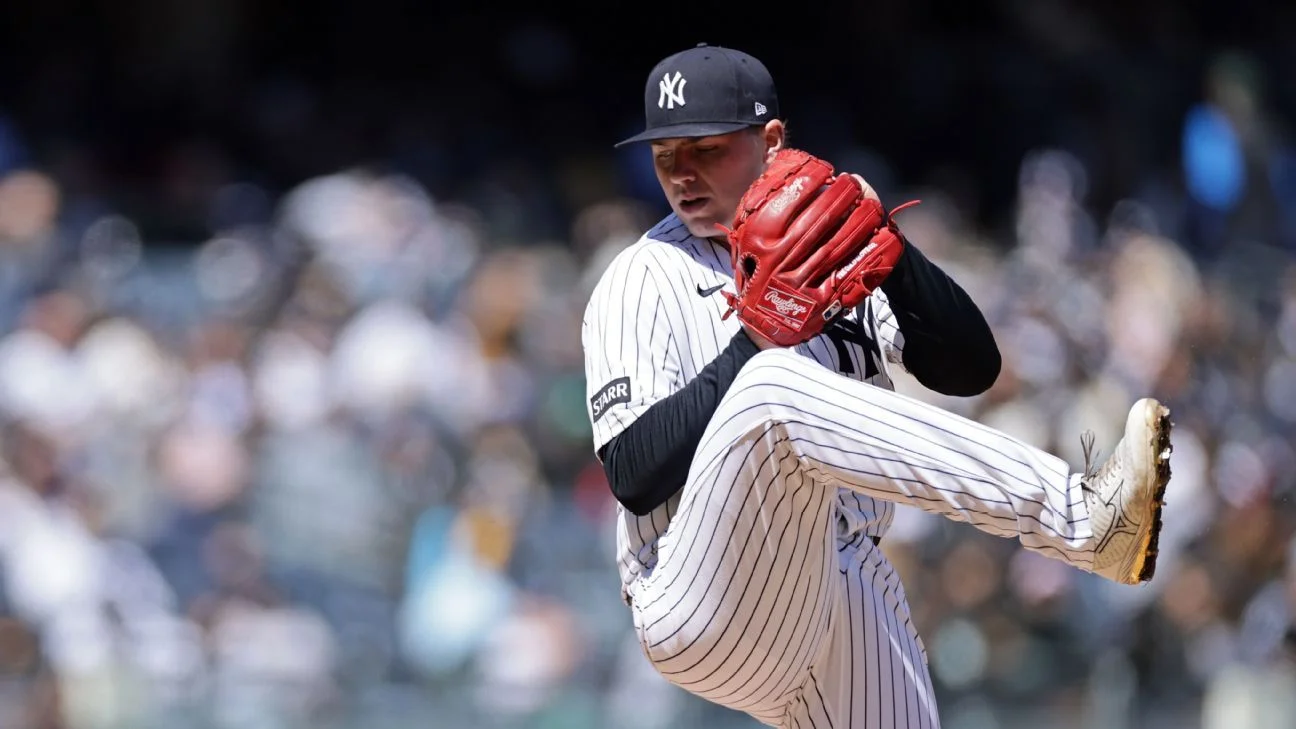
Paul Blackburn was set to start for the Yankees against the Rangers on May 7 after Ryan Weathers was scratched because of a nasty illness. The game was scheduled for a 12:35 p.m. first pitch at Yankee Stadium, with New York trying to win its sixth consecutive series.
Blackburn had spent most of his time in relief, appearing in nine games before this assignment and getting beyond two innings only once. Now he was being asked to handle a start against a Texas lineup that had left-hander MacKenzie Gore lined up opposite him.
The switch changed the shape of the game before it even began. What had looked like a normal early afternoon start was leaning toward a bullpen-heavy matchup, especially with the high-leverage arms on both sides having the night off the day before.



That was one reason the Yankees turned to Blackburn, who had been working out of the bullpen before this move. New York had already taken the opener of the series and dropped the second game, leaving the rubber game to decide whether it would keep rolling with another series win.
Gore came in with a 4.67 ERA through seven starts, and he had not worked into the sixth inning since his first two outings of the year. His command had been a problem in Texas, along with the walk rate that had followed him through the first month of the season.
The pitching shuffle also came with roster movement. Brendan Beck was brought up from Triple-A for a possible debut, while Yerry De los Santos was sent down after pitching on Wednesday. The Yankees and Rangers each framed the matchup as a decisive one, with New York posting that afternoon baseball was coming up and Texas calling it a series to settle.
For Blackburn, the assignment was more than a fill-in turn. It was a test of whether a reliever with limited length could stretch into starter’s work against a team trying to close out a road series, and whether the Yankees’ patchwork plan could hold long enough to protect a run at another series victory.