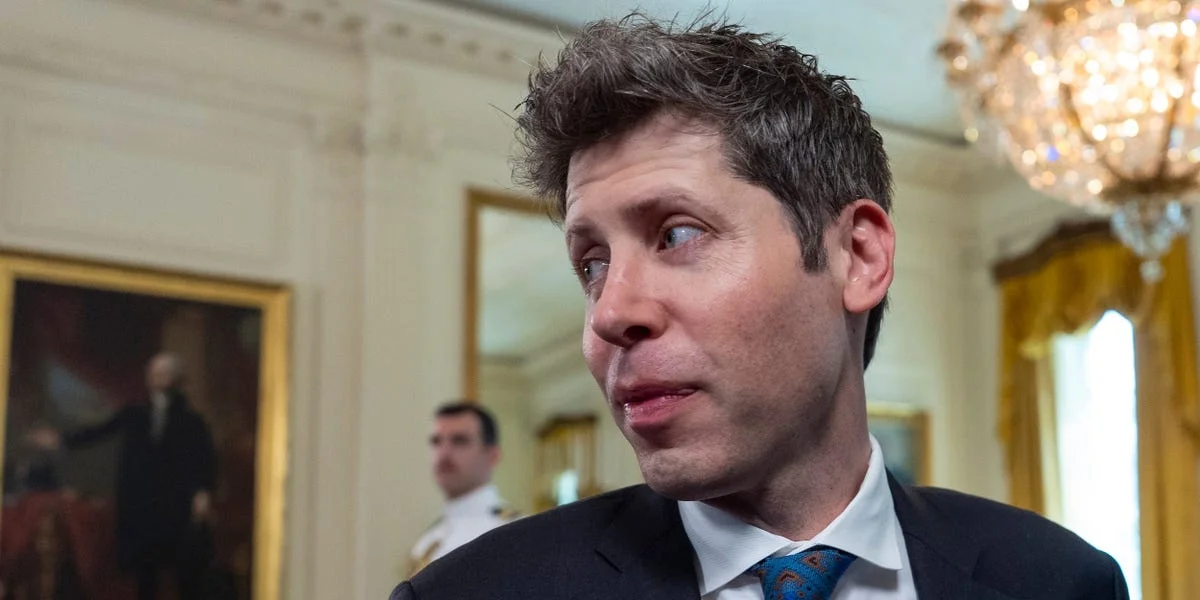
OpenAI CEO Sam Altman said artificial intelligence is bringing back the kind of startup founder Silicon Valley used to dismiss: the person with a big idea but no way to build it alone. Speaking with Stripe CEO Patrick Collison at Stripe Sessions, Altman said the rise of AI means it is now possible for people who deeply understand their users, but cannot code, to attract funding.
"All of a sudden it's like the revenge of the idea guys," Altman said, adding that for a long time the industry looked first for technical talent on founding teams. "And that's still very important, but now people who just really deeply understand their users and can't code at all. I want to fund those people."
The shift matters because it marks a real change in how startup talent is judged. Altman, who previously led Y Combinator, said the incubator and much of Silicon Valley used to laugh out founders who came in saying, "I have the best idea. I'm not going to tell you what it is. I have the best idea. I just need a coder to build it for me and then I'm going to be in great shape." He said, "And we would make fun of these people."


That older mindset favored technical builders above all else. Altman said the best startups still usually have founders who know each other well, and he said teams that came together seven days before applying to YC rarely worked. But he also argued that AI has changed the balance enough that a founder's relationship to code is no longer the only thing that matters.
Altman cofounded OpenAI in 2015 with Greg Brockman, Ilya Sutskever, Elon Musk and others, and he said his own experience reinforces the value of trust between cofounders. "I think we had this deep mutual respect and complimentary skillset that has just worked really well," he said of Brockman. "I'm extremely grateful. I think having to go through any startup experience, but particularly an intense one without a cofounder, you have a deep connection trust to is really hard."
He also cautioned against assuming AI will reach some fixed end point on a neat schedule, saying it does not work to assume a singularity will arrive in three years or five years. That leaves founders in a different kind of race: not just to invent, but to decide what kind of people AI now allows to build. Altman has been a prolific investor since leaving Y Combinator, with early fortune tied to investments in Reddit, Stripe and Airbnb, and his comments suggest he thinks the next generation of companies may come from people Silicon Valley once would have ignored.
The tension in that view is hard to miss. Altman is celebrating a new opening for nontechnical founders even as he says technical talent remains important, and he is doing it from the center of a company whose own origins were built around a technically formidable founding team. The other shadow over the moment is Musk, who once helped launch OpenAI and is now suing the company and Altman after a notoriously bitter split. For now, Altman's message is that AI is widening the gate. What it does to startup quality, and who gets through, will be decided by the market next.