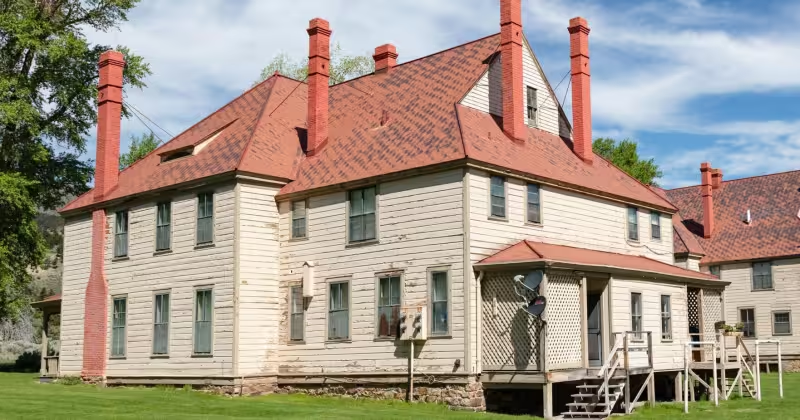
The Justice Department is asking a judge to throw out a lawsuit accusing the federal government of putting a Yellowstone National Park employee and his family in housing contaminated with lead, a case that says young children were poisoned after living there. Anthony Aiuppa, an engineer equipment operator at the park, and his wife, Emily, filed the suit in May 2025 against the U.S. Department of the Interior.
The Aiuppas say park officials knowingly placed their family in housing with high levels of lead dust beginning in 2018 and failed to complete a hazard assessment before move-in. They also allege the National Park Service did not disclose that the home contained lead-based paint and did not remediate the lead, even though they say agency policy barred placing pregnant women or children under six in housing with lead-based paint problems.
The filing puts a spotlight on historic employee housing in Fort Yellowstone near Mammoth Hot Springs, where the family lived. The couple says the government violated its own rules and broader federal obligations by leaving them in the unit without testing or cleanup, while the Justice Department argues the government was under no duty to test for or mitigate lead-based paint in employee housing. It also says the directives cited by the Aiuppas are not mandatory and specific in the way they claim.
The department further argues that the family was assigned housing at the discretion of government employees, a defense that Jon Moyers, the Billings, Montana lawyer representing the Aiuppas, said does not fit the facts. “I don’t think their defense is predicated on the facts of this case,” Moyers said. “I think it’s a reflexive argument in the hopes to get out of it.”
The motion to dismiss was filed earlier this month, and the Justice Department did not respond to a request for comment by press time. The immediate question now is whether the court treats the placement as a discretionary housing decision or as a failure to follow basic safeguards for families living in government quarters. That distinction will decide whether the Aiuppas ever get to argue the case on its merits.