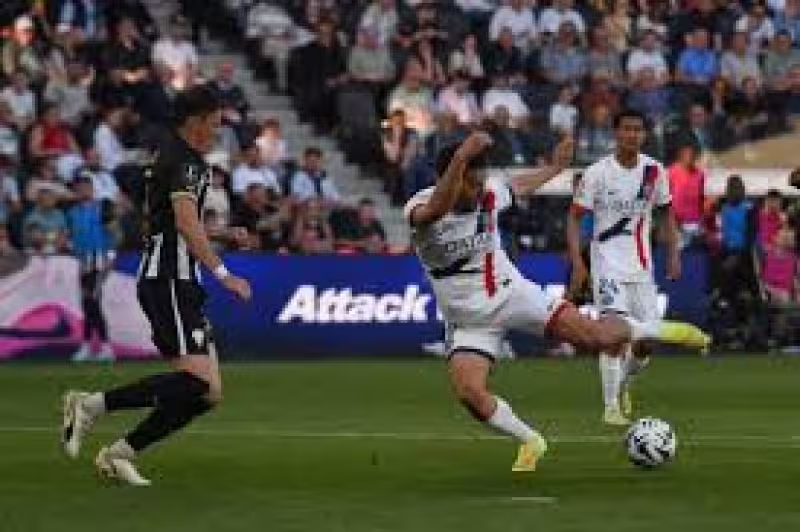
Matvey Safonov fractured his hand in the FIFA Intercontinental final shootout against Flamengo in December last year and still saved four penalties in a row, a display that turned a patient arrival at Paris Saint-Germain into something much bigger. The goalkeeper joined PSG from Krasnodar in summer 2024 for €20 million, and now he is being discussed in Paris as a possible No. 1.
That climb began far from the French capital. Safonov started in Krasnodar’s academy aged 12 after being spotted at school, and he quickly became the kind of player coaches point to when they want to explain what the club was trying to build. Aram Fundukyan said the youngster was one of the rare players who beat the club president in a game across 15 tables at the end of a season, and he remembered a boy who always had good grades, usually captained whichever team he played in and could be asked for a perfect read on what was happening in the dressing room.
Fundukyan also used Safonov as a kind of proof of concept for children coming through the system. “Even if you are from the small town of Krasnodar, from Russia, there is no ceiling; you can do anything,” he said. “Look at Safonov, this is where you can go.” He added that the goalkeeper had quick reactions and natural talent, while also describing him as “an old man in a young man’s body.”

The academy itself was built to make that sort of progression possible. In 2008, Sergey Galitsky created FC Krasnodar and began building the club’s stadium, training ground and academy, where chess lessons are mandatory two times a week for all the boys and girls. Safonov fit the model neatly: a keen chess player, a collector of board games, a fan of Russian billiards and someone who liked reading about mathematics, solving puzzles, mind games and equations.
That mix of discipline and brains helped define him long before the Paris move. Sergey Matveev said Safonov always left a good impression, was a leader in the locker room and brought confidence and vitality to the team. Safonov said it plainly when he was younger: “I’m going to be the goalkeeper.”
For PSG, the next step is no longer about whether he belongs in the squad. It is about whether a goalkeeper who once had to wait his turn in Paris has now done enough to make the job his own. For Krasnodar, he remains the clearest example of what its academy can produce: a Russian player from the club’s system who reached one of Europe’s biggest teams and arrived there with a performance too stubborn to ignore.