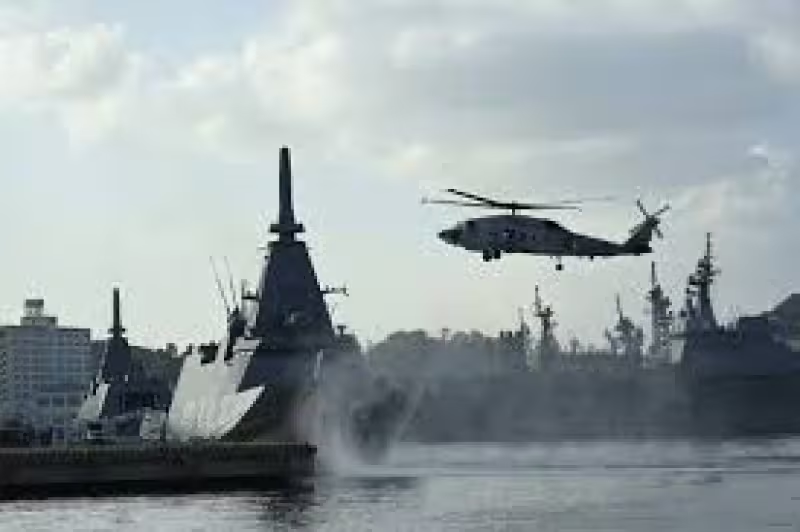
Australia and Japan have signed a deal to supply three upgraded Mogami-class frigates to the Royal Australian Navy, locking in a fast-moving reset of Australia’s surface fleet and giving Japan its largest-ever defense export. The contract was signed by the two countries’ defense ministers aboard JS Kumano in Melbourne earlier this month.
The first of the 4,800-ton ships is scheduled to be delivered by December 2029. Mitsubishi Heavy Industries will build the three frigates in Japan, while another eight will be built in Western Australia as part of a shipbuilding effort that is set to cost up to A$20 billion over the next decade, or about US$14.4 billion. Pat Conroy said this was the fastest acquisition for the Royal Australian Navy in peacetime and said Australia was working closely with Japanese and Australian industry partners to acquire one of the most advanced general-purpose frigates in the world.
For Australia, the deal is about more than adding hulls. The Royal Australian Navy now has ten surface combatants: three Hobart-class destroyers and seven Anzac-class frigates. The upgraded Mogami-class frigates will replace the Anzac class, which has long been the workhorse of the fleet. Australia is trying to reverse a decline in the number of warships as its surface combatant force heads toward its smallest size since World War II.
The new ships will bring a different level of firepower and endurance. They are to carry ESSM Block 2 surface-to-air missiles in a 32-cell Mk 41 vertical-launch system, deck-mounted Naval Strike Missiles, MK 54 lightweight torpedoes and a SeaRAM system. They will also use Japanese systems and sensors including the combat management system, sonar and UNICORN mast. Rear Admiral Stephen Hughes said the upgraded Mogami is larger and far more capable than the Anzac class and will offer greater availability of 300 days at sea annually.
Hughes said the aim is to make as few Australianized changes as possible because extra customization would delay delivery, and he said the point of the transition was capability, not ship counts. The two countries will end up operating a combined fleet of 35 Mogami frigates, underscoring how closely the deal ties Australia’s naval plans to Japan’s shipbuilding base and defense industry. Subcontracts are already being awarded, including NEC for nine types of equipment such as sonars and UNICORN integrated masts, and Rolls-Royce for MT30 gas turbines.
The question now is not whether the deal changes Australia’s fleet, but how quickly the rest of the build can be delivered on time and on budget. If the first ship arrives by December 2029 and the wider program stays on track, the Australia Japan frigate deal will mark one of the most consequential shifts in the navy’s modern history.