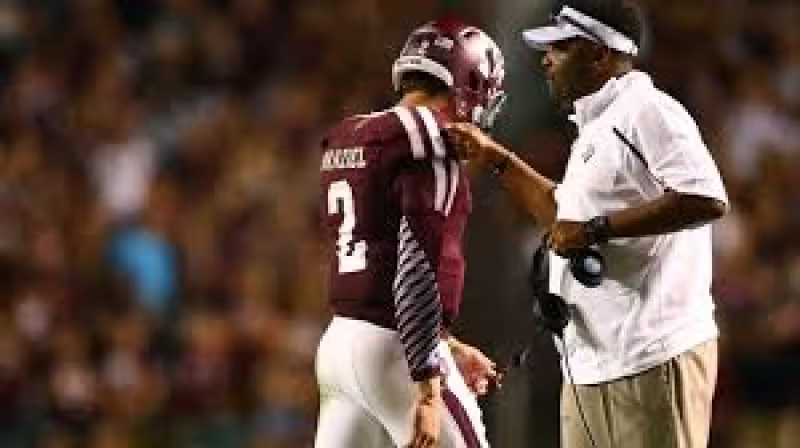
Johnny Manziel was the quarterback Cleveland wanted in the 2014 NFL Draft, and the Browns went that way even after paying $100,000 for a study that ranked Teddy Bridgewater as the top passer in the class.
Before the draft, Browns owner Jimmy Haslam, the team’s marketing department and much of the fan base were pushing for the Texas A&M star. Joe Banner was the lone major voice urging caution, but three months before the draft Haslam moved on from Banner and promoted Ray Farmer to general manager. Farmer then made the call that mattered most. Cleveland selected Manziel and passed on Bridgewater, the quarterback its own long-range study had identified as the best option over a 20-year span.
The weight of that choice did not show up immediately in the standings, but the contrast did not take long to harden. During the draft, Manziel texted then-quarterbacks coach Dowell Loggains that he wanted to “wreck the league” in Cleveland, and Loggains forwarded the message to coach Mike Pettine. Pettine later traded up to draft him. By Week 15, Manziel was making his first start against the Cincinnati Bengals, and it went badly: he completed 10 of 18 passes for 80 yards, threw two interceptions, took three sacks and was part of a 30-0 loss.
Bridgewater’s side of the story moved in the opposite direction. He won Rookie of the Year with the Minnesota Vikings after starting 12 games, winning six and throwing for 2,919 yards with 14 touchdowns. He followed that with a Pro Bowl season, finishing with 3,231 yards, 14 touchdowns and 9 interceptions while helping Minnesota reach the playoffs.
The Browns’ internal process also made the decision harder to dismiss. The team had an analytics department led by Ken Kovash, and former offensive coordinator Shawn Watson said Cleveland likely spent more time scouting Louisville and Bridgewater in person than any other team. But the source account in Terry Pluto’s The Browns Blues says the front office did not fully lean on that evaluation when the final quarterback choice was made. Ownership, marketing and the fan base wanted Manziel. The team’s own study said Bridgewater. Cleveland chose the player with the louder pull, not the one its research preferred.
Manziel lasted two seasons in Cleveland and finished with a 2-6 record. Bridgewater’s career took the path the Browns had their chance to choose, and the gap between those two outcomes is still one of the clearest reminders of how a draft-room decision can shape years of football after the applause fades.