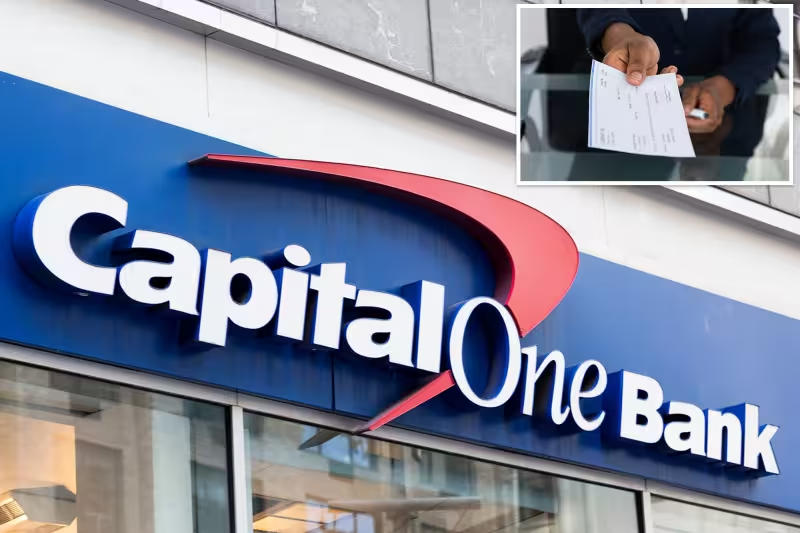
A federal judge on Monday finalized a $425 million settlement with Capital One, closing a case that accused the bank of steering customers away from savings accounts that paid much higher interest.
The deal covers customers who held a Capital One 360 Savings account at any time between Sept. 18, 2019, and June 16, 2025, and eligible former and current account holders should start receiving payments within the next month or two without taking any action. The settlement also forces Capital One to raise the interest rate on its 360 Savings Account to match the yield on its 360 Performance account.



The case had been unfolding in court for nearly two years, and Judge David Novak rejected an initial settlement last November. The dispute centered on Capital One’s creation of two savings accounts with nearly identical names, 360 Savings and 360 Performance Savings, that paid vastly different interest rates. When the 360 Performance Savings account launched in 2019, it carried a 1.9% interest rate, while the original 360 Savings account paid 1%. The gap later widened as the 360 Savings rate fell to a 0.3% annual percentage yield and the 360 Performance Savings rate rose as high as 4.35%.
The lawsuit said the bank did not make the difference clear to customers and worked to keep them from realizing they could earn more by switching accounts. Under the settlement, about three-fourths of affected customers are still holding the lower-paying account, which means the account rate change could matter immediately to a large share of people who were caught in the dispute. The earlier deal was rejected because it did not fairly compensate account holders and did not clearly tell current holders they could move to the higher-yielding account.
For customers, the payment process is automatic and the account-rate adjustment is immediate in practical terms. For Capital One, Monday’s approval ends a case that had threatened to stretch on and left open questions about how the bank presented two products with similar names but very different returns. The settlement now gives the lower-paying account holders both cash relief and the promise of the same yield offered on the higher-rate version.