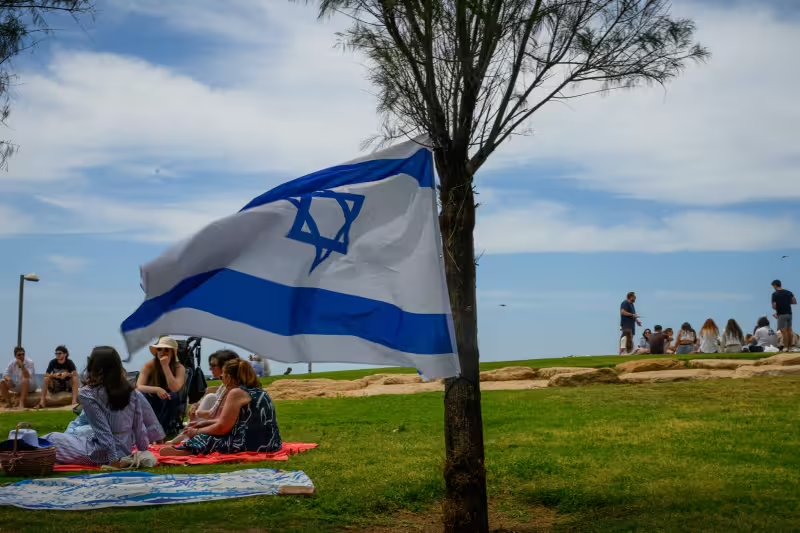
Israel marked its 78th Independence Day on May 1, 2025, as Yom Ha’atzmaut began Tuesday evening and the country faced a question sharper than any parade or ceremony: whether it still intends to be a modern civic state grounded in equal obligation, or is sliding toward a theocratic and hierarchical order.
The answer matters now because the next election must be held by October, and voters will cast it after months of war, exhaustion and anger. The wars that followed Hamas’ Oct. 7, 2023 attack have upended and destroyed lives, while Prime Minister Benjamin Netanyahu’s assault on the judiciary and democratic institutions has widened a devastating chasm between his remaining supporters and highly energized opponents.
One of the deepest fractures runs through military service. The continued draft exemption for tens of thousands of Haredi youth has become a major source of anger at the same time the Israel Defense Forces have been stretched perilously thin during the wars, with some Israelis serving reserve duty for more than half the year. For many families, the argument is no longer abstract. It is about who carries the burden, who gets to step aside and who gets told to keep going.

That strain has also shown up in incidents that would once have been dismissed as isolated disciplinary matters. Four IDF servicewomen lit a barbecue on base on a Friday night after sundown last week and were sentenced to two weeks in military prison before the punishment was later reduced after public outcry. Their infraction was framed as harming religion and Judaism, a formulation that landed hard in a country already arguing over how much religious authority should shape military life.
Around the same time, several young women finishing two years of IDF service were fined and brought before disciplinary proceedings for immodest dress on the day of their discharge. The military later acknowledged that the handling of the discharge case deviated from its own regulations, but the women were still docked a third of their salaries. For critics, the penalty said as much as the process: even when the army admits it got the procedure wrong, the cost can still fall on the women involved.
The same fight surfaced during the Jerusalem Marathon, held in heavy heat, when male soldiers were permitted to run in shorts while female soldiers were required to run in long pants. Avigdor Liberman condemned the order and said that anyone who thinks a female soldier wearing shorts is a problem is the problem. The comment cut because it named the larger dispute without softening it — modesty rules are no longer just about clothing, but about who gets to define public life.
That is why this Independence Day felt less like a celebration than a stress test. The holiday usually asks Israelis to look back on survival and statehood; this year it also forced them to look straight at the terms of belonging. With war still grinding on, reserve units still strained and an election due by October, the country is moving toward a vote that may decide not only who governs, but what kind of state Israel intends to be.