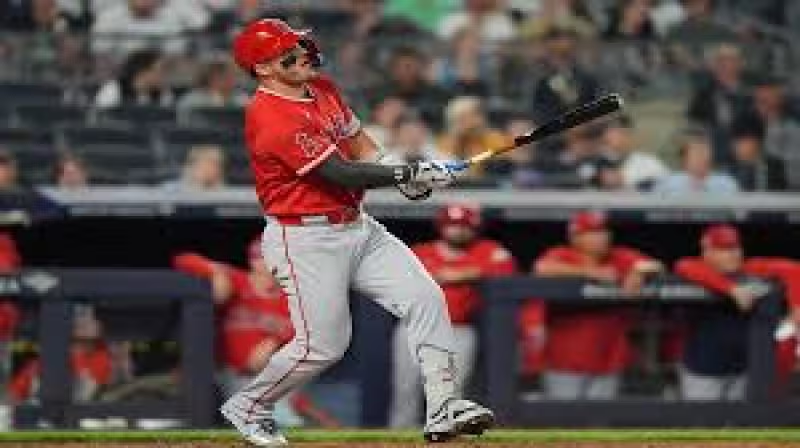
Mike Trout answered Thursday with the kind of night that turns a stat into a story. He hit a 446-foot homer, drew three walks and helped the Los Angeles Angels beat the New York Yankees 11-4 in the series finale at Yankee Stadium.
It also put him in a spot no active player occupies lightly. Trout entered the day 13th in AL/NL history in OPS among players with at least 1,000 plate appearances, wedged between Mickey Mantle and Joe DiMaggio and just ahead of Stan Musial. Babe Ruth, Ted Williams and Lou Gehrig filled the first three places, and Aaron Judge was sixth. Trout’s homer was his seventh of the season, his fifth in the series against the Yankees, and the first time anyone had done that to New York since George Bell in June 1990.
For the Angels, a team that had played only 20 games when this story was written, the performance was more than a hot night. It was a reminder that Trout, who turns 35 in August, is still capable of bending a game and a list of legends at the same time. He said after the game that the feeling is “pretty close” to the best he has felt in years, adding that he felt good at the end of last year but is now “just seeing the ball and staying with a routine and having a good game plan up there.”

That matters because the recent past has looked nothing like the résumé. From 2021 to 2025, injuries kept Trout off the field for more games than he played. He had spent seasons collecting questions about what was left. Thursday offered a cleaner answer: when healthy and locked in, he still belongs in the same breath as the game’s greatest hitters, and the numbers now say so as plainly as the swing did.
Angels bench coach John Gibbons called Trout “probably the most humble superstar I’ve ever been around,” while hitting coach Brady Anderson said he is “one of the coolest down-to-earth humans you’ll ever meet.” Anderson also placed Trout directly in the lineage that begins with the names at the top of the OPS list, saying that as you move down the top 20 you reach Mantle, then DiMaggio, then Trout, and that his name sits “right in the middle of the game’s all-time legends, and rightfully so.”
Anderson said Trout loves to hit “to an unusual degree,” and would keep going for four hours per day if left alone, often finding grooves in the cage where “every ball he hits is loud and on the same part of the bat, often more than 10 in a row.” That is the tension inside Trout’s career now: the injuries have slowed the body, but the bat still speaks in the same old language. Thursday at Yankee Stadium, it spoke loudly enough to answer the biggest question around him.