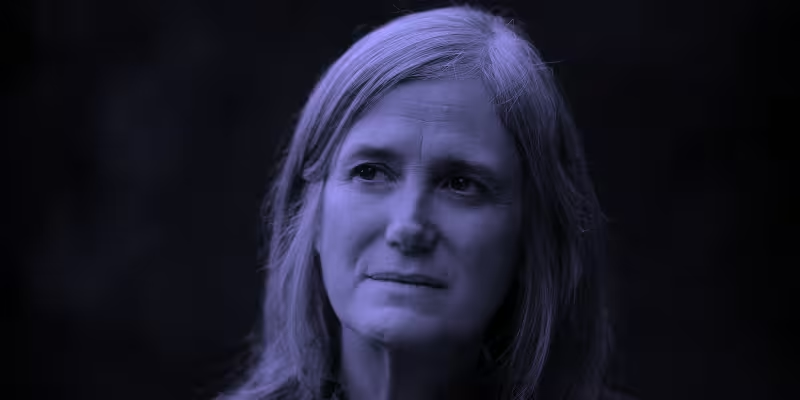
Amy Goodman said journalism loses its purpose when it is treated like a private prize. The host of Democracy Now! told The Intercept Briefing this week that she encourages others to take her work and spread it, adding, “I encourage that. Steal this story, please. It’s a failure if it’s an exclusive.”
Goodman’s comments came as Democracy Now! marked its 30th year and as a new documentary about her life and career, Steal This Story, Please!, was released. The film follows how she built the independent news program and how she came to see access as a trap when it means “trading truth for access.”
The conversation with host Akela Lacy put Goodman’s case for independent journalism in direct terms. She said, “We are covering these critical issues of the day, and we want to ensure that these stories get out because independent media is essential to the functioning of a democratic society.” For Goodman, that obligation is not abstract. “It’s our job to hold those in power to account,” she said, adding that she cares about “the answer” and about the gap between the money spent on war and the people left without health care.
That argument lands in a media environment she says is distorted by who pays for the coverage. Goodman warned against a system in which “weapons manufacturers, who provide millions to networks to advertise” help shape reporting on war. She said the same pressure can reach climate and economic coverage, arguing that oil, gas and coal companies should not determine how the press covers climate change, and banks or other financial institutions should not shape reporting on inequality.
The documentary, made by filmmaker Tia Lessin, traces Goodman’s journalism career from the 1980s to the present and places her work at the center of the independent news movement she helped build. With Steal This Story, Please! now out, Goodman is using the film’s release to make a broader case: the public loses when major stories are guarded as exclusives, and the press loses when access matters more than truth.
Her answer is blunt. The point of the work, she said, is not to protect the story. It is to get it out.