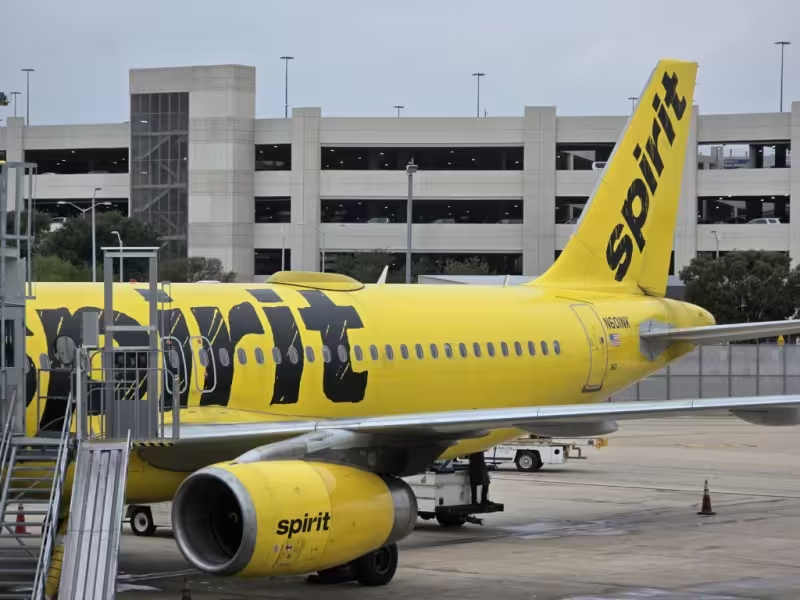
The U.S. bankruptcy trustee is asking a court to hold up Spirit Airlines' exit from its second Chapter 11 case, saying the company has not given creditors enough information to judge whether its latest restructuring should go forward. The trustee said Spirit has not explained why its first bankruptcy plan failed, why this time would be different, or why it did not press further on alternatives such as a merger with Frontier.
The filing lands as Spirit tries to move quickly through the court. The airline wants confirmation of its plan by May 27 and hopes to emerge in early summer, but it cannot start soliciting votes until the disclosure statement is approved. The trustee, meanwhile, is urging the court not to approve that statement yet, arguing the record does not yet provide “adequate information” for creditors facing a plan that would wipe out all shareholders and unsecured creditors.



That fight matters because Spirit is not just asking to reorganize; it is asking creditors to accept a severe reset. Under the plan, the new equity would go to the roll-up DIP lenders, subject to dilution, while general unsecured claims and existing equity would get nothing. Spirit is also proposing significant downsizing, with a fleet expected to fall to 76 to 80 aircraft by the third quarter. The company has said its plan is better than liquidation, but the trustee says it needs to better explain why distributing the proceeds from a liquidation would not be the superior outcome.
Spirit emerged from bankruptcy on March 12, 2025, but was back in Chapter 11 within six months, underscoring how quickly the carrier’s turnaround unraveled. The new case is being framed around a leaner airline, yet the numbers point to a fragile one: JPMorgan analyst Jamie Baker said that if jet fuel stayed at $4.60 a gallon for the rest of the year, Spirit’s operating margin would swing from negative 7% this year to negative 20%, adding about $360 million in fuel expense. He also said Spirit ended the period with $337 million in cash.
That leaves the court with a narrower question than whether Spirit deserves to survive. The immediate issue is whether creditors have been given enough detail to decide whether this plan is actually worth voting on, or whether the company is asking them to choose blindfolded between a risky reboot and a liquidation it has not convincingly ruled out.